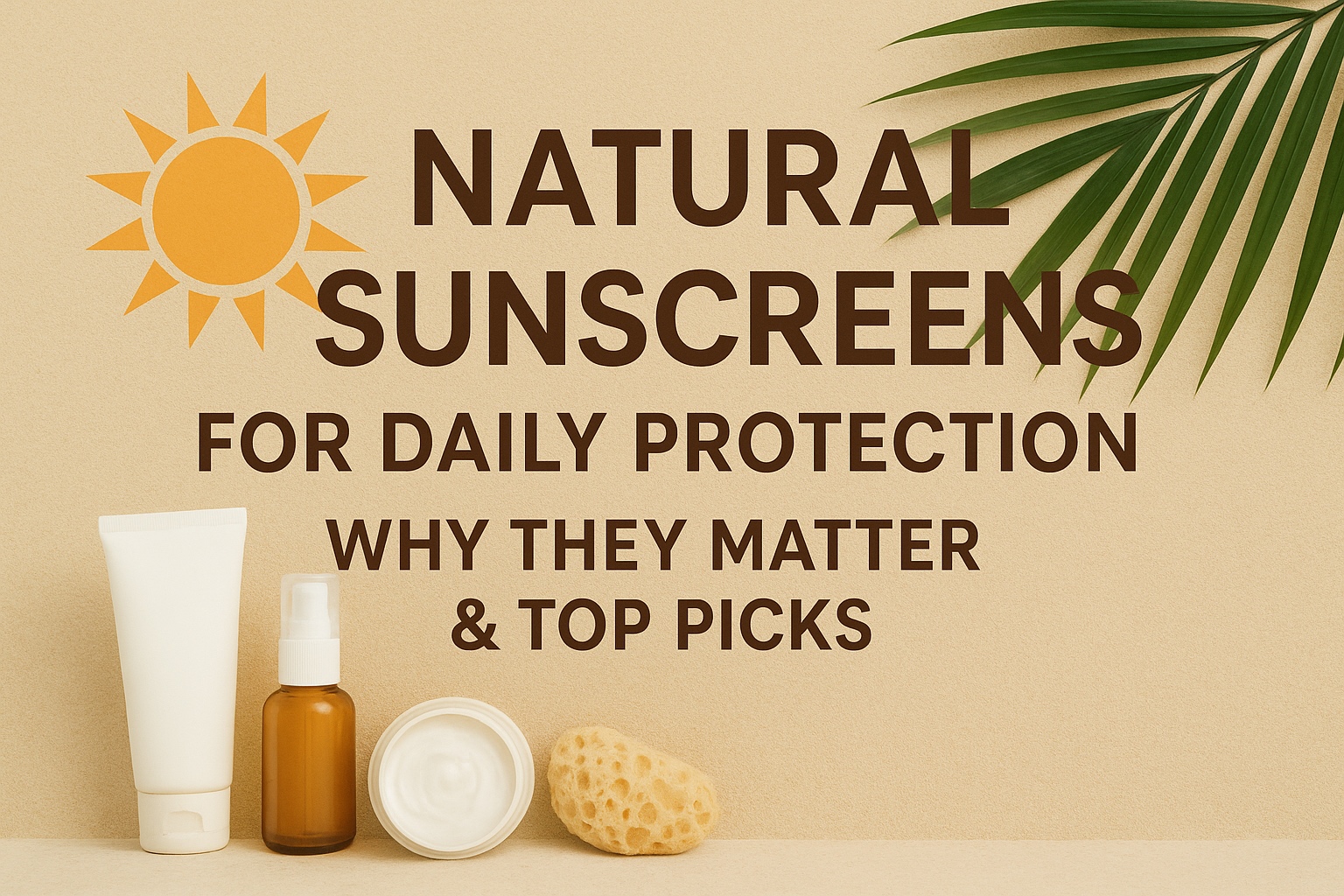
Natural Sunscreens for Daily Protection: Why They Matter & Top Picks
Why Choose Natural (Mineral) Sunscreen for Daily Use
When we talk about natural sunscreens, we often mean mineral sunscreens—those that use zinc oxide and/or titanium dioxide as their active filters. Unlike chemical sunscreens that absorb UV rays, mineral actives sit on the skin’s surface and reflect or scatter UV light. This mechanism makes them a gentler, often more skin-tolerant option.
From a scientific perspective, mineral filters are particularly effective because their particles scatter UV light, which contributes to their photoprotective properties. arXiv Studies of sunscreen optics show how scattering and absorption coefficients influence both protection and visible whiteness (“white cast”). arXiv
Mineral sunscreens also tend to be reef-safe, as they avoid certain chemical filters that have raised concerns for marine environments. Because of their physical blocking, they often work immediately on application (no need to wait 15 minutes), though they can rub or sweat off more readily.
How to Evaluate Mineral Sunscreens
Here are key criteria to look at when choosing a natural sunscreen:
-
SPF and Broad-Spectrum: Pick SPF 30+ with broad UVA/UVB protection.
-
Filter Type: Zinc oxide offers strong broad-spectrum coverage; titanium dioxide helps too.
-
Formulation: Lightweight fluid vs. thicker cream — depends on daily usage.
-
Other Ingredients: Look for antioxidants, ceramides, or skin-calming agents if you have sensitive skin.
-
Water Resistance: Useful if you’re active or sweating, though for purely “daily protection” non-water-resistant may suffice.
Science & Evidence: Why These Work
-
Mineral sunscreens rely on light scattering to protect skin. The reflectance and absorption properties of particles like zinc oxide or titanium dioxide fundamentally determine efficacy. arXiv
-
The Skin Cancer Foundation and dermatologists often recommend mineral sunscreens, particularly for sensitive or reactive skin.
-
According to Prevention magazine, mineral sunscreens remain top picks for skin safety and broad spectrum protection. Prevention
-
However, one commonly noted trade-off is the visual white cast, especially on deeper skin tones. Techniques like applying in thin layers or using tinted mineral formulas can help.
For more on mineral sunscreen, check out the Wikipedia entry on sunscreen (see also the “Inorganic filters” section).
Top Natural Mineral Sunscreens on Amazon
Here are some highly recommended natural sunscreen categories. Click the keywords below to explore matching products on Amazon:
-
-
Mineral Sunscreen SPF 50 Zinc Oxide Face
Lightweight, 100% mineral facial sunscreens with zinc oxide and titanium dioxide, offering matte, fast-absorbing protection ideal for daily wear. -
Organic Zinc Oxide Sunscreen SPF 30
Naturally formulated sunscreens made with clean ingredients such as zinc oxide, plant oils, and vitamin E. Often reef-safe and suitable for sensitive skin. -
Sensitive Skin Mineral Sunscreen SPF 46
Gentle, oil-free mineral sunscreens designed for acne-prone or reactive skin, frequently enriched with soothing ingredients like niacinamide and hyaluronic acid. -
Mineral Sunscreen Face and Body SPF 50
Broad-spectrum protection suitable for both face and body, offering long-lasting coverage for daily outdoor exposure. -
Vegan Unscented Mineral Sunscreen SPF 30
Lightweight, fragrance-free mineral formulations with a sheer-matte finish that blend well with various skin tones.
-
My Analysis & Recommendations
-
Best for Sensitive or Reactive Skin: La Roche-Posay Anthelios Mineral Face Sunscreen. Its fluid texture and antioxidant complex make it comfortable for daily wear.
-
Cleanest / Most Natural Formula: Badger Mineral Daily SPF 30. Extremely simple ingredient list, great for those preferring minimal formulations.
-
Best for Acne-Prone or Redness-Prone Skin: EltaMD UV Clear. The inclusion of niacinamide helps calm, and the transparency of the zinc oxide avoids heavy white cast.
-
Best for Multifunctional Use (Face + Body): La Roche-Posay Mineral Lotion SPF 50. One product for both, water resistance is a plus for occasional sun exposure.
Tips to Maximize Daily Use
-
Apply liberally — many people under-apply, reducing effectiveness.
-
Layer smartly — use a thin base layer, reapply if needed, especially on high-exposure zones (nose, cheeks).
-
Combine with other protection — hats, sunglasses, and shade still help, even with daily SPF.
-
Patch-test — mineral filters are generally gentle, but always test new sunscreen if you have very sensitive skin.
Final Thoughts
Natural (mineral) sunscreens are an excellent choice for daily protection: they’re effective, often more skin-friendly, and better for the environment. While they may have trade-offs like a slight white cast, formulations today are getting lighter, more blendable, and more cosmetically elegant.
If you’re looking to switch to a cleaner, gentler sunscreen routine, consider starting with one of the five Amazon options above. And remember, daily use is more important than picking the “perfect” SPF — consistency is key.
 We’d love to hear from you! Please leave your thoughts and experiences with Tea Tree Oil in the comments below.
This article contains affiliate links. If you purchase through these links, we may earn a small commission at no additional cost to you.